
When you know your current home no longer works for the way you live, the next question isn’t always as simple as what to change. Sometimes, the bigger question is whether the existing home is the right starting point at all.
Do you renovate what is already there? Undertake a major addition? Or does it make more sense to build a new custom home from the ground up?
For Los Angeles homeowners, the decision between renovation vs. new construction can be particularly nuanced. The property, existing architecture, neighborhood, site conditions, permitting requirements, budget, and long-term plans for the home can all influence which direction makes the most sense.
There isn’t one answer that applies to every property, but there are several important considerations that can help determine the right path forward.
Start with What You Already Have
Before deciding what your home could become, it is important to understand what you are starting with.
An existing home may have architectural character worth preserving, a layout with strong potential, quality construction, or a footprint that can be thoughtfully adapted. In those cases, a renovation can allow homeowners to retain what they love while reconsidering the parts that no longer serve them.
Other properties require a more significant transformation.
Structural limitations, outdated systems, a challenging floor plan, previous additions, or a footprint that doesn’t support the homeowner’s goals can substantially increase the scope of a renovation.
This is why evaluating the existing conditions is an important first step. The question isn’t simply, Can this home be renovated? Most homes can. The better question is whether the existing home provides the right foundation for what you ultimately want to create.
Consider How Much You Want to Change
There is a significant difference between updating a home and fundamentally reimagining it. If your goals involve refinishing existing spaces, improving functionality, opening select rooms, or adding square footage, renovation may provide the flexibility you need.
But, if the wish list includes changing nearly every aspect of the home—its footprint, circulation, ceiling heights, structural system, major utilities, exterior architecture, and relationship to the site—it is worth evaluating whether working within the existing structure still serves the project.
At a certain point, preserving a home simply for the sake of preserving it can introduce complexity without providing meaningful value. New construction offers a different kind of opportunity. Instead of adapting an existing structure, the home can be planned around the property, architecture, and client’s needs from the beginning.
Neither approach is inherently better. The extent of the desired transformation helps determine which makes more sense.
Understand the Realities of a Major Renovation
Renovations are often assumed to be simpler than new construction because part of the home already exists. For large-scale projects, that isn’t always the case.
Building within an existing structure requires the construction team to understand how new work will interact with old work. Walls may be opened to reveal conditions that couldn’t be fully assessed beforehand. Existing framing, foundations, electrical systems, plumbing, or previous construction may require adjustments as the project progresses.
Thorough pre-construction planning can identify many of these conditions before work begins, but renovation will always involve a different set of variables than starting with a clean slate.
That doesn’t make renovation undesirable. It simply makes experience, planning, and communication especially important. An experienced general contractor can work closely with the architect and design team to evaluate existing conditions, anticipate potential challenges, and establish realistic expectations before construction begins.
Look Beyond the Initial Construction Cost
When comparing renovation vs. new construction, cost is understandably one of the first considerations, but the comparison is rarely as straightforward as asking which costs less per square foot.
With a renovation, there may be demolition, structural reinforcement, remediation, temporary protection, system upgrades, and the careful integration of new and existing construction. New construction carries its own costs, including demolition when applicable, site preparation, utilities, permitting, and constructing every component of the home from the ground up.
There are also considerations beyond the construction contract itself. Will you need to live elsewhere during the project? How much of the existing investment in the property can be retained? Are there elements of the current home that would be costly to replicate? Does one option better support the property’s long-term value and your plans for living there?
The most useful budget conversation considers the complete scope of the project rather than comparing two numbers in isolation.
In Los Angeles, the Property Matters
In Los Angeles, the lot itself can have an enormous influence on the decision. A hillside property presents different considerations than a relatively flat lot. Neighborhood context, access, existing structures, zoning, and other site-specific requirements can all affect what is feasible.
There are also properties where the existing home is an important part of what makes the site special. Los Angeles has a rich and varied architectural landscape. Mid-century homes, Spanish Revival residences, Craftsman houses, and other distinctive properties can offer character that homeowners and design teams intentionally choose to preserve.
In those cases, a thoughtful renovation isn’t about forcing an older home to become something it isn’t. It is about understanding what deserves to remain and carefully integrating what comes next.
On another property, the site may present an opportunity to begin again and design a home specifically around its views, light, landscape, and the way its owners want to live.
The property should help inform the architecture—not simply serve as the place where construction happens.
Think About How You Want to Live in the Finished Home
Construction decisions can quickly become focused on plans, budgets, schedules, and square footage, but the reason for undertaking the project in the first place is the life that will happen there afterward.
Think beyond what you want to change and consider what you want the completed home to make possible.
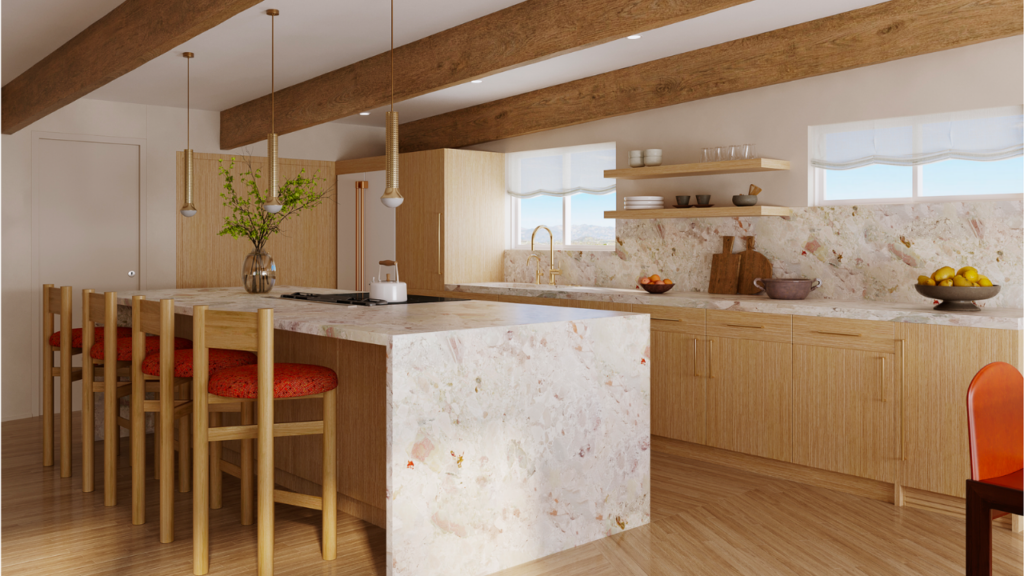
Perhaps the existing home has the character you love but needs a better connection between the kitchen and outdoor spaces. Maybe a growing family needs additional bedrooms without wanting to leave a neighborhood they have called home for years.
Or perhaps the existing structure places too many limitations on the home you envision, and designing from the ground up would allow the architecture to respond more intentionally to your family, property, and lifestyle.
Those priorities matter. A successful project isn’t measured by how much of a home was preserved or how much was built new. It is measured by how well the finished home works, how thoughtfully it was executed, and whether the decisions made along the way support the client’s long-term vision.
Don’t Make the Decision in Isolation
One of the most valuable things a homeowner can do is involve the right professionals before becoming too committed to either direction.
An architect can help explore what is possible from a design and planning perspective. A general contractor can provide insight into existing conditions, constructability, budget implications, sequencing, and the realities of executing each option.
Bringing those perspectives together early can reveal opportunities—or challenges—that aren’t obvious when looking at the property alone.
At Joel & Co., we believe the strongest projects begin with this kind of collaboration. Our role isn’t simply to arrive once every decision has been made and begin construction. Early involvement allows us to work alongside homeowners, architects, and designers to understand the vision and help establish a clear path for bringing it to life.
Renovation vs. New Construction: There Is No Universal Answer
So, is it better to renovate or build new? It depends on the home, the property, the scope, and most importantly, what you are trying to accomplish.
A well-considered renovation can preserve the character and qualities that made you love a home in the first place while allowing it to evolve for the way you live today.
New construction can offer the freedom to create something specifically designed for its site and its owners, without the constraints of an existing structure.
Both can result in exceptional homes. The important part is making the decision with a clear understanding of what each path requires—and surrounding yourself with a team that can help you evaluate the possibilities before construction begins.
Considering a Renovation or Custom Home in Los Angeles?
Joel & Co. partners with homeowners, architects, and designers on custom homes and large-scale renovations throughout Los Angeles. With a collaborative process, experienced team, and commitment to thoughtful craftsmanship, we approach every project with the same goal: to build well, communicate clearly, and create a home designed to endure.
If you’re deciding whether to renovate an existing home or build from the ground up, we’d be glad to start the conversation.