Key Takeaways
- Indoor-outdoor integration is fundamental, not optional; it extends the living area, responds to the climate, and delivers measurable market premiums in LA’s luxury home sector.
- Success requires site-specific response, analyzing microclimates, wind patterns, noise sources, and privacy needs before making any design decisions.
- Material continuity and operable glass systems create seamlessness, extend interior flooring outdoors, and use large-format retractable glass walls with flush thresholds.
- Orientation drives performance, southern exposures excel for primary living spaces while east and west facades demand aggressive shading and high-performance glazing.
- Regulatory compliance and specialized engineering add costs; hillside construction costs double flat-land equivalents. Budget appropriately for geological studies, permits, and complex foundations.
Los Angeles custom homes have perfected the art of erasing boundaries between interior and exterior spaces. This seamless integration, rooted in Mid-Century Modern principles and refined through contemporary building science, responds directly to Southern California’s climate while delivering quantifiable market value. Indoor-outdoor living isn’t a trend or luxury feature; it’s the foundational design principle that defines modern LA architecture.
This guide reveals the technical strategies, material choices, regulatory considerations, and cost factors that transform conventional homes into integrated indoor-outdoor environments. Whether you’re planning a hillside masterpiece in the Hollywood Hills, a coastal retreat in Malibu, or an urban sanctuary in Venice Beach, understanding these core principles ensures your project achieves both aesthetic excellence and lasting value.
What Is Indoor-Outdoor Living And Why Is It Essential For Modern LA Homes?
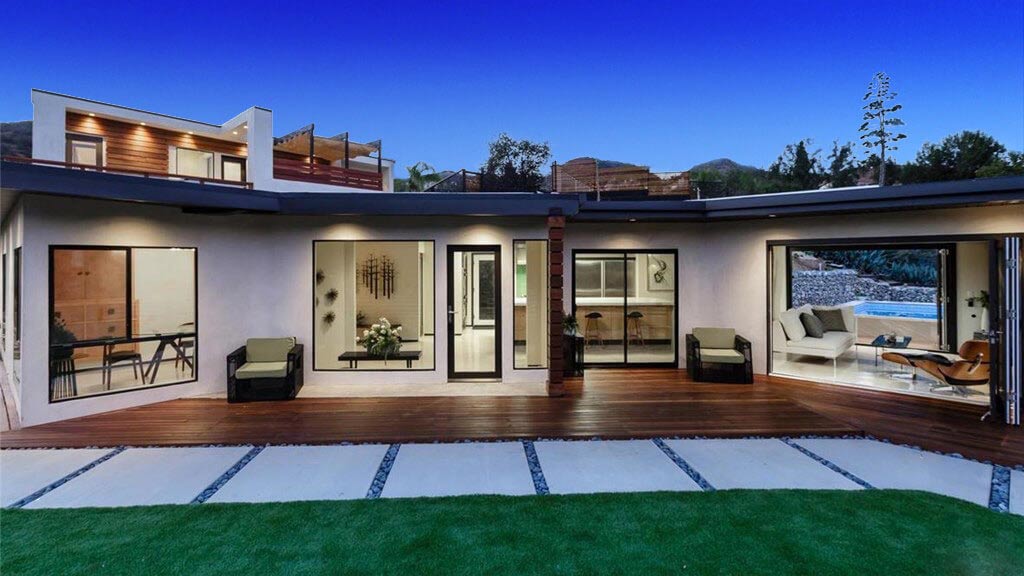
Indoor outdoor living Los Angeles eliminates the traditional boundary between interior and exterior spaces. Large-format operable glass walls, flush thresholds, and continuous flooring create a unified environment where patios, decks, and gardens function as extensions of interior rooms. This isn’t a trend; it’s a fundamental design principle rooted in the Mid-Century Modern movement and perfected in contemporary LA custom homes.
The approach is essential because it responds directly to Southern California’s climate while delivering quantifiable value. Homes with seamless indoor-outdoor integration command significant price premiums, sell faster, and retain value better than comparable properties lacking these features. In a market where views and lifestyle define luxury, modern custom home indoor outdoor design is not optional; it’s the baseline expectation for modern LA architecture.
What Are The Core Principles Of Designing An Indoor-Outdoor Living Space?
Three principles define successful indoor-outdoor design: material continuity, functional outdoor rooms, and climate-responsive strategies. Material continuity means extending interior flooring, large-format stone, wood decking, or polished concrete directly into exterior spaces. This unified palette eliminates visual breaks and reinforces the seamless connection between inside and out.
Outdoor rooms transform landscapes into functional living areas. Complete kitchens, fireplaces, integrated seating, and weather-protected zones create spaces that rival interior comfort. Strategic orientation, shading devices, and natural ventilation complete the framework, ensuring these spaces perform year-round across LA’s diverse microclimates, from coastal fog to inland heat. Working with an experienced custom home builder ensures these principles are executed with precision.
How Do You Begin Designing The Perfect Indoor-Outdoor Space In A Modern LA Home?
Start with rigorous site analysis. LA’s microclimates vary dramatically; coastal areas experience cool, moist conditions while inland valleys face dry heat. Understanding your specific site conditions drives every subsequent design decision. Analyze sun paths, prevailing winds (west-southwest), seasonal wind events (Santa Anas), noise sources, and neighboring sightlines.
Next, address three critical planning factors.
- Wind: Use windbreaks, screens, and layered landscaping to harness prevailing breezes for ventilation while blocking high-speed seasonal winds.
- Noise: Achieve acceptable outdoor sound levels (≤65 dBA) through strategic setbacks, building orientation, and absorptive surfaces like grass and vegetation.
- Privacy: In dense urban areas, courtyards and enclosed patios provide seclusion without sacrificing natural light or ventilation.
Finally, define your program, identify whether outdoor spaces will serve dining, lounging, recreation, or multiple functions. This clarity shapes all architectural decisions that follow.
What Are The Key Design Elements For Creating Seamless Indoor-Outdoor Spaces?
Large-format operable glass walls form the technical foundation of indoor-outdoor design. Multi-slide and pocket door systems allow entire walls to disappear, completely merging interior living areas with exterior patios and gardens. Large sliding doors pocket doors LA come in three primary configurations, pocket, multi-slide, and bi-fold, each offering different budget points and degrees of openness.
The flush threshold completes the seamless transition. By eliminating vertical separation between interior and exterior flooring, flush thresholds create an uninterrupted plane that enhances aesthetics and accessibility. Weather-rated threshold systems maintain this visual continuity while managing water infiltration and thermal performance. Together, operable glass and flush thresholds dissolve the traditional boundary between inside and outside.
What Are The Common Materials Used In Indoor-Outdoor Designs For Modern LA Homes?
Material selection responds to LA’s unique environmental challenges. In Very High Fire Hazard Severity Zones (VHFHSZ), building codes mandate noncombustible and ignition-resistant materials for all exterior elements, decking, siding, window frames, and railings. This requirement shapes material palettes throughout hillside communities where fire risk is elevated.
Coastal environments demand equally rigorous material choices. Malibu residences use concrete, Ipe wood, and marine-grade stainless steel to resist salt spray corrosion and moisture exposure. Regardless of location, material continuity remains essential: extend interior flooring and wall materials directly into outdoor spaces to create visual cohesion. Large-format stone, wood decking, and polished concrete work effectively across both environments when specified for exterior durability. Professional general contractors ensure proper material specification and installation.
How Does Technology Enhance The Indoor-Outdoor Living Experience?
Technology transforms indoor-outdoor spaces into climate-controlled, year-round environments. Automated shading systems, motorized louvers, retractable awnings, and smart blinds respond to sun position and temperature, managing heat gain and glare without manual intervention. These systems are particularly critical on east and west-facing facades where low-angle sun creates intense thermal loads.
Integrated climate control extends beyond shading. Deep roof overhangs, operable pergolas, and strategically positioned ceiling fans create passive ventilation while reducing mechanical cooling loads. Advanced systems combine sensors, weather data, and automated controls to optimize comfort throughout the day. The result: outdoor spaces that perform as reliably as interior rooms across LA’s seasonal variations.
What Are The Challenges Of Designing Indoor-Outdoor Spaces In LA’s Urban Environment?
Urban sites present density, privacy, and regulatory constraints. On tight lots, the central courtyard solves multiple problems simultaneously. Glass walls surrounding an enclosed courtyard create a private, light-filled core that maintains seclusion from neighbors while blurring interior-exterior boundaries. This strategy, common in Venice Beach and other dense neighborhoods, turns spatial limitation into architectural opportunity.
Regulatory compliance adds complexity. Projects must satisfy local zoning, setback requirements, Title 24 energy codes, and fire safety standards (VHFHSZ). In hillside locations, the Baseline Hillside Ordinance (BHO) imposes strict height limits, grading restrictions, and setback requirements to protect ridgelines and public views.
Successful urban indoor-outdoor design navigates these constraints while maintaining the seamless integration that defines the LA aesthetic. Quality control systems ensure compliance throughout the construction process.
What Are The Benefits Of Indoor-Outdoor Living In Modern LA Custom Homes?
Indoor-outdoor integration delivers quantifiable market value. Homes combining panoramic views with full indoor-outdoor features command price premiums exceeding 35% compared to comparable properties without these elements. These homes also sell significantly faster and retain value more effectively over time. The market recognizes seamless transitions as essential luxury features, not optional upgrades.
Environmental benefits complement financial returns. Strategic landscape integration provides passive cooling, reducing mechanical HVAC loads and energy costs. Layered vegetation mitigates wind while enhancing privacy. Trees and plants create microclimates that lower ambient temperatures and filter air.
The result is a home that performs better thermally, costs less to operate, and provides superior comfort, all while maximizing usable living area.
How Do You Personalize Your Indoor-Outdoor Living Space To Match Your Style?
Personalization begins with functional programming. Define how you’ll use outdoor spaces, dedicated dining areas, lounging zones, recreation spaces, or multi-purpose rooms. Each function drives specific design requirements: outdoor kitchen patio design Los Angeles needs weather-protected cooking zones and adequate utilities; lounging areas require comfortable seating, shade, and ambient lighting; recreation spaces demand durable surfaces and equipment storage.
Landscape design completes personalization. Planting schemes can enhance privacy through strategic screening, mitigate wind with layered vegetation, and provide passive cooling through shade trees and ground covers. Material selections, stone types, wood species, and metal finishes establish aesthetic character. Lighting design extends usability into evening hours while creating atmosphere. The most successful spaces reflect individual lifestyle needs while responding intelligently to site-specific environmental conditions.
Comprehensive design and construction services ensure seamless execution from concept to completion.
What Are The Latest Trends in Indoor-Outdoor Living For LA Homes?
Fully equipped outdoor rooms represent the current evolution of indoor-outdoor design. Complete kitchens with professional-grade appliances, integrated fireplaces, built-in seating, and weather-protected entertainment zones create exterior spaces that rival interior functionality. These aren’t simple patios; they’re architecturally defined rooms with ceilings, walls, and programmed uses.
Daylighting strategies increasingly emphasize vertical integration. Clerestory windows bring balanced, diffuse light deep into interior spaces, reducing artificial lighting needs while maintaining privacy. Skylights provide direct overhead illumination in bathrooms, hallways, and central living areas. For dense urban sites and lower levels, light wells create dramatic vertical channels that draw daylight down into the building core, transforming potentially dark spaces into light-filled environments.
How Do You Ensure A Seamless Transition Between Indoor And Outdoor Spaces?
Orientation drives seamless integration success. Southern orientations deliver consistent, high-quality daylight year-round with manageable summer heat gain, making them ideal for primary living spaces paired with horizontal shading devices like overhangs. Northern exposures provide diffuse, indirect light perfect for studios and offices where glare control matters. East and west orientations present challenges: intense low-angle sun creates significant heat gain and glare, requiring aggressive mitigation.
Glazing performance completes the equation. Standard double-pane windows no longer satisfy California’s Title 24 energy code. High-performance glazing with low-emissivity (Low-E) coatings and argon gas fill is now mandatory, offering superior thermal insulation (lower U-Factor) and solar heat gain control (lower SHGC). West-facing exposures demand the highest-performance glazing combined with robust shading, deep overhangs, automated blinds, and deciduous trees. East-facing facades benefit from vertical shading elements like fins and strategic vegetation. Match glazing specifications to orientation for optimal performance.
What Are the Costs Associated with Designing an Indoor-Outdoor Home in LA?
Hillside construction carries premium costs. Foundation systems on steep terrain require caissons and grade beams for stability, with total hillside construction costs often doubling flat-land equivalents. Challenging topography demands specialized engineering, extended construction timelines, and complex logistics that compound expenses. The Hollywood Hills and coastal bluffs add seismic risk factors requiring extensive geological and soil analysis before foundation design begins.
Regulatory compliance adds cost layers beyond construction. Geological studies, soils reports, and structural engineering represent significant pre-construction investments. In Malibu, California Coastal Commission review processes introduce additional expenses related to environmental impact studies, public access assessments, and coastal resource protection measures.
Budget 15-25% more for hillside and coastal projects compared to flat-land equivalents when accounting for all regulatory, engineering, and construction premiums.
Why Indoor-Outdoor Living Is The Future Of Modern LA Custom Homes
Indoor-outdoor integration isn’t optional in contemporary LA architecture; it’s the defining characteristic of successful custom homes. A well-executed design synthesizes lifestyle aspirations with technical precision and environmental awareness, creating residences that perform as beautifully as they photograph. The most accomplished projects transform constraints into opportunities: steep hillsides become cantilevered masterpieces, narrow urban lots evolve into private courtyard sanctuaries, and abundant California sunlight becomes a carefully orchestrated atmosphere.
Mastering indoor-outdoor living, view optimization, and natural light control creates homes that deliver both immediate comfort and long-term value. These aren’t superficial upgrades; they’re fundamental design decisions that shape how spaces function, how energy performs, and how markets respond. The quantifiable returns, 35%+ price premiums, faster sales, and sustained value retention, confirm what architects have understood for decades: seamless integration between interior and exterior environments defines luxury in Los Angeles.
Ready to design your dream indoor-outdoor LA home? Contact our expert team to discuss your custom home project.